Indices trading

Take positions on global indices from just 0.4 points
Get started

Discover the difference of trading indices with Lucky Star

Symbol Description Min Spread
AUS200 S&P/ASX 200 Index 1.00
US500 S&P 500 Index 0.40
US30 Dow Jones Industrial Average Index 2.00
GER40 Germany DAX 40 Index 0.90
NAS100 Nasdaq-100 Index1.00
CN50 FTSE China A 50 Index10.00
UK100 FTSE 100 Index 1.00
JPN225 Nikkei 225 Index 8.0

Flexible pricing

Variable spreads from just 0.4 points

High security standards

Segregated Bank account for funds

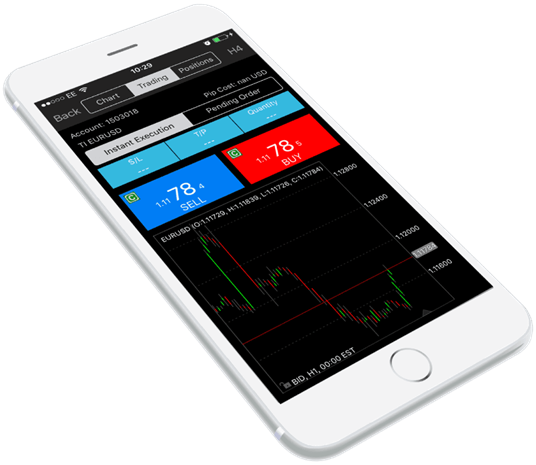
Innovative mobile app

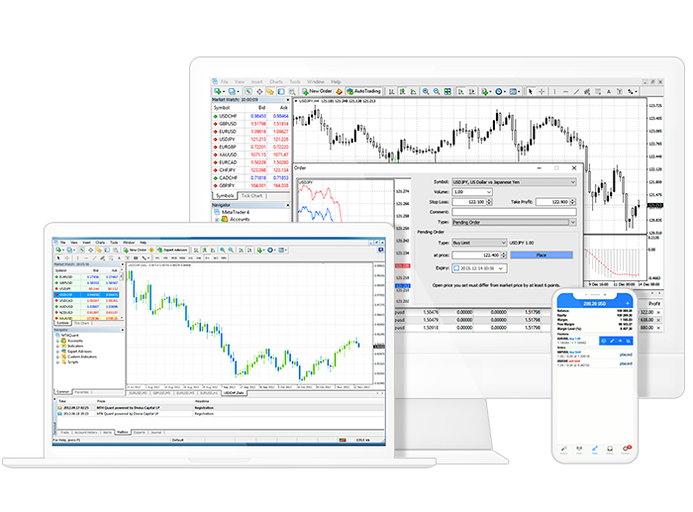
Trade anytime, anywhere with the MT5 mobile app.

Start trading indices from as low as 0.4 pips

How to trade indices

An index is made up of a group of shares and is used to track the performance of a country's economy, a market sector or an exchange.
The most traded indices include the Dow Jones Industrial Average, S&P 500, FTSE, DAX, ASX200, NASDAQ, CAC, EuroStoxx and Nikkei 225.
Since indices are just a number, they can’t be traded directly. You need a financial instrument, like CFDs, for that. In fact, indices trading is the most popular form of CFD trading.
The amount of money made or lost on a trade depends on the market move and the size of your position. At Lucky Star, you can start trading indices within minutes by opening a live account today.
Learn more

Start trading indices from as low as 0.4 pips

Practise trading indices with $25,000 virtual funds

Meet the world's major indices

The first index ever was created by Mr. Charles Dow in 1896 and is most widely known as the Dow index. Today, the Dow contains 30 of the largest US companies. It is useful to know that an index is just a list of stocks and therefore anybody can create one. This was the case during the dotcom period for example. However, what distinguishes major indices from the rest is the reputation of the companies it represents. Below is the list of the nine most important and most heavily traded indices.

1.Dow Jones Industrial Average (US30)

It includes 30 of the most influential companies in the US and is price-weighted. This means the companies with larger share prices have greater impact over its value.

2.S&P 500 (SPX500)

The S&P 500 index is float-weighted. This means, the constituent stocks impact the overall value of the index based on their market capitalisation and float (i.e. the percentage of the company that is publicly traded).

3.FTSE (UK100)

The FTSE comprises the 100 companies with the highest market capitalisation on the London Stock Exchange and is a market-weighted index, meaning its value is proportional to its constituent companies. Larger companies have greater impact on its value than smaller ones.

4.DAX (GER40)

The “Deutscher Aktienindex” is an index made up of the 40 major stocks in Germany on the Frankfurt Stock Exchange. As a result, it is similar to the Dow Jones Industrial Average of the US in this regard.

5.ASX200 (AUS 200)

This index comprises only stocks listed on the Australian Stock Exchange and is capitalisation-weighted; therefore, constituent companies with a higher market capitalisation will impact it more.

6.NASDAQ (NAS100)

Along Dow Jones and S&P500, Nasdaq is one of the most followed indices in the US and includes 100 companies with heavy focus on information technology.

7.CAC (FRA40)

Known in full as the “Cotation Assistée en Continu,” it refers to the stocks listed on France's Euronext Paris (“Paris Bourse”) stock exchange. They are selected by an independent committee quarterly, out of the 100 companies with the highest free float market capitalisation (i.e. the highest market value that is publicly traded).

8.EuroStoxx (ESTX50)

Introduced in 1998, ESTX50 is comprised of the 50 largest companies in the Eurozone and was created with the aim “to provide a blue-chip representation of Supersector leaders in the Eurozone”.

9.Nikkei225 (JPN225)

Nikkei225 is the primary stock index on the Tokyo Stock Exchange and it is price-weighted, just like the Dow Jones Industrial Average of the US. In fact, between 1975 and 1985 it was referred to as the “Nikkei Dow Jones Stock Average".

Why trade indices?

Trading indices is a popular alternative to traditional shares trading, because it allows traders to take a broader view on a group of companies and reduce the risk of being exposed to an individual company. The ability to buy or sell any index is among the key attractions for traders.

Trading indices enables you to go both long (buy) and short (sell), making it an ideal hedging instrument. You can, for example, go long on HSBC because you anticipate an increase in the bank's share price and on the same time go short on the FTSE100, in order to protect your investment from an adverse market movement.

Index trading example

Let's look at how trading indices works in practice. Your indicators give you an entry signal and you anticipate a rise in the price of the US S&P500. For that reason, you go long (buy) 3 contracts at the price of 2.288. Despite some initial volatility, the market pushes up and half an hour before market close the index is trading at 2.319. You decide to close the position and secure your profits. The profit made on this trade is 2.319 – 2.288 = 21 points. With 3 contracts, each point is worth $30, so your total profit is 21 x $30 = $630.

On the other hand, let's say the market went against your prediction. You close the position at 2.267 before you can incur more losses. The loss on the trade is 2.267-2.288 = 21 points. With 3 contracts, each point is worth $30, so your total loss is 21 x $30 = -$630.

*All spreads are generated from data between 01/11/2025 and 30/11/2025

^Other fees and charges apply.。

Lucky Star Ltd (registration number 2025-00255). Registered address: Ground Floor, The Sotheby Building, Rodney Village, Rodney Bay, Gros-Islet, Saint Lucia. Office address: 514/6 Prachasongkroh Road, Din Daeng Subdistrict, Din Daeng District, Bangkok, Thailand.

Risk warning: CFDs and leveraged products are complex instruments and carry a high risk of rapid financial loss. Make sure you understand how these products work and only trade with money you can afford to lose. The information on this website is general and does not consider your objectives, financial situation, or needs. Seek independent advice where appropriate.

Products and services are not offered in jurisdictions where their distribution or use would violate local law or regulation.

©2026 Lucky Star Ltd